


Not long ago, a search committee called to share their final discernment after months of conversations, sermons, prayers and emails. Their words were familiar, almost rehearsed by the collective memory of Black clergy everywhere.
They told me it had become evident I was called. Evident I was a gifted preacher. Evident I carry a prophetic voice the world needs.
And then came the line beneath all the other lines: “But it also became evident our context isn’t ready for a Black pastor.”
That sentence didn’t shock me. It exhausted me. Because it’s the sentence so many Black pastors hear from churches that describe themselves as moderate, progressive, justice-oriented and Spirit-led. Churches that are proud of their open table and their inclusive language but still unsure what to do with a Black shepherd.
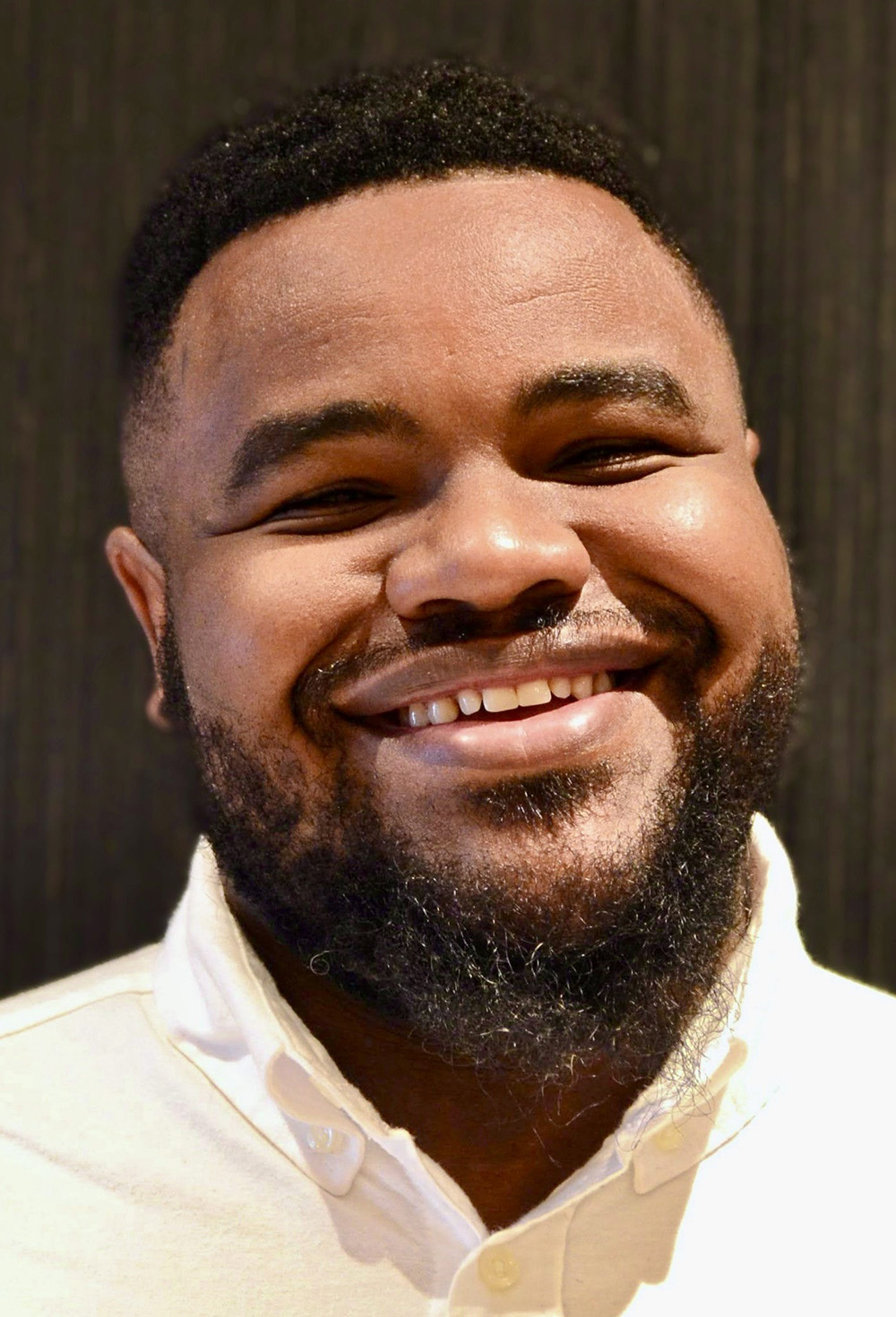
Braxton Wade
Progressive imagination often is wider than progressive practice.
Even in Cooperative Baptist Fellowship life, where gifted and talented women are finally being called as pastors, LGBTQ inclusion is growing and “justice” sits beautifully on our websites, the call process is still shaped by laity. And many of those laypeople have been discipled far more by cultural comfort and whitewashed gospel than by liberation theology and active gospel.
They often fear the ripple effects of a pastor who looks like me, not because I am unqualified, but because my presence disrupts the unspoken norm of “how things always have been.”
“A Black pastor doesn’t just preach differently. A Black pastor reorients the room.”
A Black pastor doesn’t just preach differently. A Black pastor reorients the room. A Black pastor expands the imagination. A Black pastor disrupts the myth of neutrality. And for some, that disruption feels like a risk, a risk that often seems not worth it.
Recently, I was invited to preach at a predominantly white church that considered itself very progressive, the kind of church with the right signs on the lawn and the right books on the coffee table. After the benediction, the pastor leaned over with a smile and said, “That was a very Black sermon.”
A few minutes later, the chair of the deacons added, “It was good … but you were so loud. So excited, it was a lot.”
They meant it as feedback, but what I heard was: We want diversity, but we’re not ready to hear the gospel through your voice. If my joy, my cadence, my passion, my prophetic interpretive lens, my hermeneutic, and my “blackness” are treated as quirks to be managed rather than gifts to be received, then the issue is not my preaching. The issue is the theological imagination of the congregation and the box they have put God in.
There are churches that listen to the Spirit and call pastors who don’t look like them. And don’t get me wrong, I have Black clergy friends who have been called by white CBF churches. Churches that listened to the Spirit and trusted the Spirit’s voice over their own fear. Churches that call gifted, prophetic pastors, some in rural communities, some in large metropolitan cities, and others even in Texas. Because the Spirit doesn’t have limitations and God doesn’t have geographical boundaries. The issue is not that it never happens. The issue is how rarely it does.
I’ve also been held, sometimes even carried, by white clergy who get it.
I would be dishonoring the truth if I didn’t say this as well: I have white clergy friends who have reminded me of my calling when I was too discouraged to hold it myself. Friends who clear their calendars when I forward them another email from a stranger who “can’t get over the race thing.” Friends who sit with me, share a meal with me, look me in the eye and say, “The world needs your voice in a pulpit on a consistent basis.”
“I have white clergy friends who have reminded me of my calling when I was too discouraged to hold it myself.”
The grace is real, but the grace often comes from individuals, not the system.
Until we preach a liberation gospel in white spaces, the doors will stay closed and the system will continue to do what the system has done. The uphill climb for pastors of color is not due to a lack of gifting, preparation or calling. It’s because of the system. It’s because many white churches, yes, even progressive ones, never have been formed by a gospel that sounds like good news to people who are not already comfortable.
Jesus’ very first sermon in Nazareth was a liberation proclamation: “The Spirit of the Lord is upon me … to set the oppressed free.” If liberation sounds political instead of biblical, then the congregation hasn’t yet met Jesus in that text. The congregation hasn’t explored the underbelly of the text, as Austin Channing Brown says. A church shaped by liberation preaching will not fear a Black pastor; however, a church shaped only by comfort inevitably will.
Despite every email over the years from search committees, my calling isn’t up for a committee vote. Search committees can discern many things, but they do not get to define the legitimacy of my calling.
My calling comes from the God who liberated enslaved Israelites. The God who spoke to Mary, a dark-skinned girl from Nazareth, and invited her to tabernacle with God and carry Emmanuel, God with us. The God who sat with the woman at the well. The God who commanded us to feed the hungry, welcome the stranger, love our neighbor. The God who has been redeeming humanity back to Godself since the beginning. That God called me to preach the gospel, not just with words, but with presence. To be a pastor, not where it is easy, but where it is needed. To shepherd, even in spaces still wrestling with whether they’re “ready.”
This is not an indictment but rather an invitation into the wilderness.
Let me say this more directly and clearly: This is not an indictment of the white church, of CBF, of moderates, progressives, search committees or my white clergy peers. This is an invitation into the wilderness, the very place where God frees people.
Because liberation rarely begins in comfort. It begins with courage. It begins with a God who hears the cries of the oppressed and says, “Let my people go.”
Friends, I’m asking you, as a brother in Christ, as someone who loves this tradition, as someone who loves CBF and the refuge it has become, as someone who loves his neighbor, as someone who believes the Spirit is not done with us, step into that wilderness with me.
Not because it is safe, but because it is holy. I am inviting you to move beyond the book study. Beyond the social-media post. Beyond the symbolic gesture. Beyond quoting your Black friend’s wisdom in a sermon as if that alone is justice.
The prophet Micah wasn’t offering an optional curriculum when he declared: “Do justice. Love mercy. Walk humbly with your God.” He was revealing to us what God had revealed to him, a map out of Egypt.
And Egypt isn’t always geography. Sometimes, Egypt is the fear that keeps a church from calling a Black pastor. Sometimes Egypt is the silence that protects comfort. Sometimes Egypt is the book study or the “all are welcome.” Sometimes Egypt is “come as you are” but leave as we are. Sometimes Egypt is the polite avoidance of truths that need to be spoken out loud.
But, beloved, the same God who split the seas is still calling the church to choose Exodus over Egypt. God never has asked if we were “ready,” only if we are willing.
“If we truly believe in a gospel that sets captives free, then we must elevate the voices our systems have historically pressed down,”
Sharing the pulpit is a good step, but liberation demands us to keep walking. If we truly believe in a gospel that sets captives free, then we must elevate the voices our systems have historically pressed down — the female pastor, the pastor of color, the immigrant pastor, the pastor with an accent that tells a story, the pastor who prophetically refuses to preach a domesticated gospel. Hospitality welcomes people into the sanctuary, liberation hands them the mic, and kin-dom work lets them lead.
This isn’t about diversity for diversity’s sake. It’s about the fulness of God’s voice being heard by God’s people through truly all of God’s people.
There is hope in the wilderness. And here’s what I need you to hear: I still believe in the church. I still believe in white churches. I still believe the Spirit is stirring in places that don’t yet know what freedom feels like.
The wilderness may look barren, but it’s actually the place where manna falls. It’s the place where water comes from rocks, where God meets us even when we aren’t looking for God, and invites us to lean into freedom and fullness. This hope is not based on what churches have been but on what God is forming them — us, even — to become.
I have seen rural white churches call Black pastors. I have seen Texas congregations choose faith over fear. I have watched churches step into an unknown future and find God already waiting there. Remember, the wilderness is not the end of the story in Exodus or for you or the church. It’s where the story becomes possible. It’s where we are reminded that God moves into every neighborhood. Not just the safe neighborhoods, not just the familiar ones, not just the neighborhoods that look like ours. Every neighborhood. Every story. Every human. Every voice.
And if God is unafraid to move into every neighborhood, the church should be unafraid to let every neighborhood voice lead.
The church can be ready if we choose liberation gospel over fear. White churches can be ready for Black pastors. Progressive congregations can be ready for liberation preaching. Laity can be discipled beyond comfort. Because readiness is not a feeling, readiness is a decision.
And when the church decides, truly decides, to choose freedom over fear, courage over comfort, Exodus over Egypt, then you won’t just be ready for a Black pastor. You’ll be ready for the kin-dom. The real one, the liberating one, the one God has been building since the beginning, through prophets, unlikely leaders, wilderness wanderers, gifted women, tax collectors, fishermen, children, rich, poor, Jesus, and, yes, pastors who look like me.
May we be the church that doesn’t wait to feel ready — but the church that follows God into the wilderness anyway, trusting liberation is always on the other side.
Braxton Wade is a business leader and pastor in Richmond, Va. He has served in multiple pastoral roles across multiple churches and denominations. After years in multi-unit corporate leadership, he’s returning to full-time ministry to pursue racial reconciliation and justice, spiritual formation and the restoration of human kind.