



I recently discovered the work of the Polish poet Anna Kamienska. Her work titled “Small Things” runs 30 lines, but here is enough to suggest what she is up to.
It usually starts taking shape
From one word
Reveals itself in one smile …
It comes from laundry hung on a balcony
From hands thrust into dough …
It’s when you slice bread
When you pour out some tea.
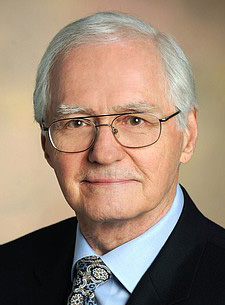
Richard Conville
By “small,” Kamienska means not big. For example, slicing the bread is a small action. But she also means ordinary, mundane, not grand. She pulls it all together with a beautiful and profound metaphor at the end:
It’s not from the grand
But from every tiny thing
That it grows enormous
As if Someone was building Eternity
As a swallow its nest
Out of clumps of moments
Clearly the poem expresses a religious, even Christian, sensibility. The gradual accumulation of Small Things, those “clumps of moments,” eventually becomes a Big Thing — as in many small acts of kindness over time eventually creating a gentle and nurturing culture. For many, it is the basis of Christian hope.
But the metaphor also has a dark side.
Surely, when Donald Trump, in a social media post Feb. 17, 2017, wrote that the mainstream media were “the enemy of the American people,” (a small thing for sure, just one short sentence), alarm bells should have gone off. Surely, after a November 2015 rally in Myrtle Beach, S.C., when he did a ridiculing impersonation of a New York Times reporter coping with arthrogryposis, alarm bells should have gone off. Protesters should have taken to the streets. But it was such a small thing!
“Protesters should have taken to the streets. But it was such a small thing!”
Some, of course, did protest, on both counts, but too few. Most of us are not used to doing our politics in the streets. Consequently, after 10 years of Trump ruling the media (which he both hates and loves), those small sentences and small gestures have accumulated as those “clumps of moments” in the poem did. Trump has built not a swallow’s nest, but an infrastructure of the complicit who are destroying our democratic freedoms.
How did this happen? Historian Timothy Snyder recounts the experience of Germany in the 1930s and 1940s. When the National Socialist (Nazi) Party did well in elections, he recounts, “what followed was a combination of spectacle, repression and salami tactics — slicing off layers of opposition one by one.”
But those tactics do not guarantee success. Victor Orban, the ultimate authoritarian and prime minister of Hungary, was voted out of office last April after 16 years. Asked how the citizens of Hungary accomplished such a feat, Snyder said (1) they listened to opposition voices; (2) they were persistent in their opposition; and (3) they got used to protesting — taking to the streets.
So that’s how you unbuild that infrastructure of the complicit who have created policies that have ravaged the middle and lower economic classes (tariffs that have raised the price of groceries, cuts to SNAP that have increased food insecurity among the poor, and starting a war that has caused the cost of gas to skyrocket).
That’s how you unbuild that infrastructure of the complicit who are bent on crushing our constitutionally guaranteed freedoms (government by executive order; masked, anonymous ICE agents sweeping up “suspects” without due process; using the Justice Department to punish members of the opposition party).
So beware of those “salami tactics” and be prepared to do some of your politics in the streets. It could come to that. Vote for those who will begin to unbuild the infrastructure of the complicit. As Dietrich Bonhoeffer wisely observed, “Not to act is to act.”
Richard Conville is professor emeritus of communication studies and service learning at the University of Southern Mississippi and a 48-year resident of Hattiesburg where he is a member of University Baptist Church.