


Editor’s note: This column includes strong language near the end that may be offensive to some readers.
Of all the four themes of Advent, love is the one that seemingly ties a bow around the others — both positively and negatively.
When we think of hope, peace and joy— or the opposites of despair, anxiety and sorrow — we may find love is the common denominator in causing us to experience the positive or negative traits of the season. A friend said to me last night, “Love makes possible hope, peace and joy. And feeling unloved can lead to despair, anxiety and sorrow.

Mark Wingfield
Yes there are other causes of these negative feelings but love — or the lack of love — plays a starring role.
Glen Geher writes in Psychology Today: “In the human evolutionary story, forming close, trusting, and loving connections with others is a core feature of how we thrive at all levels. Love is, in short, a foundational element of thriving. And this fact is true for people across the globe.”
Problem is, what is love anyway? Or to borrow a phrase, “What’s love got to do with it?”
We have so overused this word as to sometimes make it meaningless. I truly love ice cream. But I also may love my family and friends. I love a good night’s sleep, but I also love staying up late watching TV. I love going on vacation but I also love coming back home.
“We have so overused this word as to sometimes make it meaningless.”
Love or unlove in action
On the spiritual side, you’ve likely heard at least two dozen or more sermons in your lifetime about the three Greek words for “love” used in the New Testament: Phileo, eros, agape. That’s a whole sermon outline right there.
You likely will recall the episode in John’s Gospel (chapter 21) where Jesus asks Peter the disciple three times if he “loves” him, each time escalating the intensity of the word in Greek. That arc culminates in this: “He said to him the third time, ‘Simon son of John, do you love me?’ Peter felt hurt because he said to him the third time, ‘Do you love me?’ And he said to him, ‘Lord, you know everything; you know that I love you.’ Jesus said to him, ‘Feed my sheep.’”
The moral of that Bible story, of course, is that true love requires action. It cannot be static. It cannot remain neutral. It must rise to the occasion, come to the defense of the beloved, speak out when injustice is done.
Side note here: One of the reasons five-point Calvinism is so obnoxious is that it lacks love — even while its adherents swear they are condemning you out of love.
A pastor friend texted me this week to comment on a person I had written negatively about: “She is the product of a theological system that creates complete assholes.”
Many of us wonder how conservatives can so easily ignore the plight of refugees and immigrants despite the Bible’s command to welcome and love such strangers. The most common defense is to begin with the false statement that they all — by default — are criminals because they are here in the U.S. without advance permission. Except that’s not the way our laws work. Rodney Kennedy wrote a piece for me last week explaining in detail how this is a false starting point.
Another friend commented: “If you start with the premise that crossing the border illegally is fundamentally criminal, even though it is a civil violation, you can justify anything.”
Back to Calvinism: If you start with the premise that all people are worms unloved by God because of inborn sin, you can justify anything — including a fiery hell with eternal conscious torment. That is a theology that worships a God of hate rather than a God of love. No matter how you dress it up in nice language, roasting people in hell for eternity cannot be the action of a loving God.
“No matter how you dress it up in nice language, roasting people in hell for eternity cannot be the action of a loving God.”
Hopefully you’ve seen the falderal last week about the actor Kirk Cameron questioning a literal burning hell. Al Mohler accused him of “remodeling hell.” Members of the Hell is Hot Club lost their minds that their golden boy of “Left Behind” fame has fallen into theological error.
All this is to say: One of the first ways love gets turned to being unloved — and the good news of the gospel gets turned into bad news — is by limiting the scope of God’s love. Some of us have trouble with John 3:16 — “For God so loved the world … .” Back to the Greek: The word translated “world” in English is kosmos. Yes, the whole of creation.
Churches and love
In our evangelistic tradition set free from Calvinism, we sing about the love of God all the time. I remember an oldie from my childhood: “Whosoever Meaneth Me.” If you have trouble remembering the tune, just think of the middle section of the Gomer Pyle TV show theme song; they’re a lot alike.
“Whosever surely meaneth me; surely meaneth me; oh surely meaneth me.”
Others come to mind:
- “We Are One in the Bond of Love”
- “Love Lifted Me”
- “Oh, How I Love Jesus”
- “Love Is the Theme”
- “I’ve got the love of Jesus, love of Jesus down in my heart”
I can’t recall the number of church mission statements and logos and marketing campaigns that incorporate the word “love.” Most churches want to be portrayed as people who love — even if few truly live up to that reputation: “We’re a fellowship of love” or “Loving people loving people.” Clever, that last one.
In my book Why Churches Need to Talk About Sexuality, I tell the story of what happened the first Holy Week after Wilshire Baptist Church’s vote to welcome all people equally into full membership of the church. One of the first pastors to reach out to me and George Mason was Neil Thomas, pastor of Cathedral of Hope, the largest predominantly gay church in America.
Out of that conversation, we agreed to share services for Maundy Thursday and Good Friday.
What happened those two nights was more a movement of the Spirit than I could have imagined. Perhaps 200 or more Cathedral of Hope members flooded our Sanctuary on Maundy Thursday, many having been raised in Baptist churches but excluded later due to their sexual orientation or gender identity. They were in awe that a Baptist church would welcome them. Over and over they thanked us for welcoming them into a space that felt so familiar but they thought they’d never step foot in again.
“You don’t really know how important love is until you’ve been unloved.”
And then on Good Friday, a smaller number of Wilshire members received the warmest welcome possible at Cathedral of Hope. When Pastor Neil introduced George Mason and said words of affirmation about Wilshire, the entire Cathedral of Hope congregation stood and gave us a lengthy standing ovation. I have seldom seen George Mason speechless, but that night he was so moved, so emotional, so dumbfounded that words were hardly possible. A church full of Christians who knew what it was like to be rejected welcomed us with an ovation.
You don’t really know how important love is until you’ve been unloved.
Saturday night, Alison and I had dinner with our friends Karen Keen and Sally Gary. Sally runs a group called CenterPeace that helps families talk about and accept their LGBTQ children and siblings. After I explained what I was working on, Sally immediately told me the story of a friend of theirs who lost everything when she came out as a lesbian to her Christian family. She lost her job in the family business; she lost her home; she lost her relationship with her siblings and parents. And to make matters worse, her father — who will not talk to her — travels the country giving seminars on why Christians must reject fellowship with anyone in the LGBTQ community.
In case you can’t understand this, let me spell it out: That is not love; that is hate. And it is the kind of hate that causes people made in the image of God to feel unloved.
A ‘love’ that excludes
This is not unique to gay people, by the way. “Loving Christians” are good at excluding immigrants, the poor, the dirty, the unhoused, the strange and the stranger. Just for starters.
Outside the scope of religion, feeling unloved takes many forms. Geher suggests: “If you think about your lowest moments in life, my guess is that a good proportion of such moments might be found at times when you felt decidedly unloved. Such experiences might include:
- Feeling unappreciated and unseen by your own parent or parents
- Experiencing betrayal in a long-standing friendship
- Experiencing betrayal in a long-standing romantic relationship
- Being abandoned by a loved one
- Feeling dismissed or insulted by someone close to you.
Unloved at Christmas
Now, this is a Christmas lesson, after all, so let’s turn our thoughts to being unloved amid the season of joy. Remember that not even Baby Jesus was loved by all; King Herod’s jealous rage sent the Holy Family packing to Egypt.
And yes, they were refugees at that point. Some people have their Christmas knickers in a knot because of Nativity scenes like the one at Oak Lawn United Methodist Church in Dallas. I’ve seen way too many conservatives posting on social media this week — and emailing me — to say Jesus and Mary and Joseph never were refugees because they went to Bethlehem for a census, not to flee persecution. Apparently they stopped reading at “O Holy Night” and missed the next part. So much for believing the Bible “cover to cover.”
But back to Christmas.
A popular Christmas song, drawn from lyrics by Christina Rossetti, is “Love Came Down at Christmas.” The lyrics say:
Love came down at Christmas,
Love all lovely, Love divine;
Love was born at Christmas,
Star and angels gave the sign.
Worship we the Godhead,
Love incarnate, Love divine;
Worship we our Jesus:
But wherewith for sacred sign?
Love shall be our token,
Love be yours and love be mine,
Love to God and all men,
Love for plea and gift and sign.
This is a song about God’s love for us. According to the most basic Christian theology, the Advent of Jesus, the Nativity, the Incarnation — this is a sign of God’s love to all creation. Not just humans but all creation.
Loved by God?
Even if someone feels unloved by their family, surely they know they are loved by God, right? Turns out that’s not necessarily so.
There’s some interesting research that finds better mental health among those who either want to be loved by God and feel that love and those who don’t care about being loved by God. The people in distress are those who want to be loved by God but do not feel the love. It is the unmet expectation of God’s love that causes anxiety.
This research upends one of the key tenets of the evangelical tradition — that you cannot be happy in life without knowing the love of God. It turns out the worst situation is not just being disconnected from the love of God but instead desiring the love of God and not feeling it.
Here’s where the love theme reconnects with the previous three themes of Advent. Despair, anxiety and sorrow may easily lead us to feel unloved.
The traditional teaching of the church is that God loves you, and there is vast biblical evidence to back up that claim. Many of those New Testament verses relate to God’s eternal salvation, which may not be enough for those who feel unloved right now. To say God loves you and will take you to heaven does little to offset feeling unloved by everyone around you right now.
“It must be the kind of love that not only demonstrates God’s love for each of us but our love for others.”
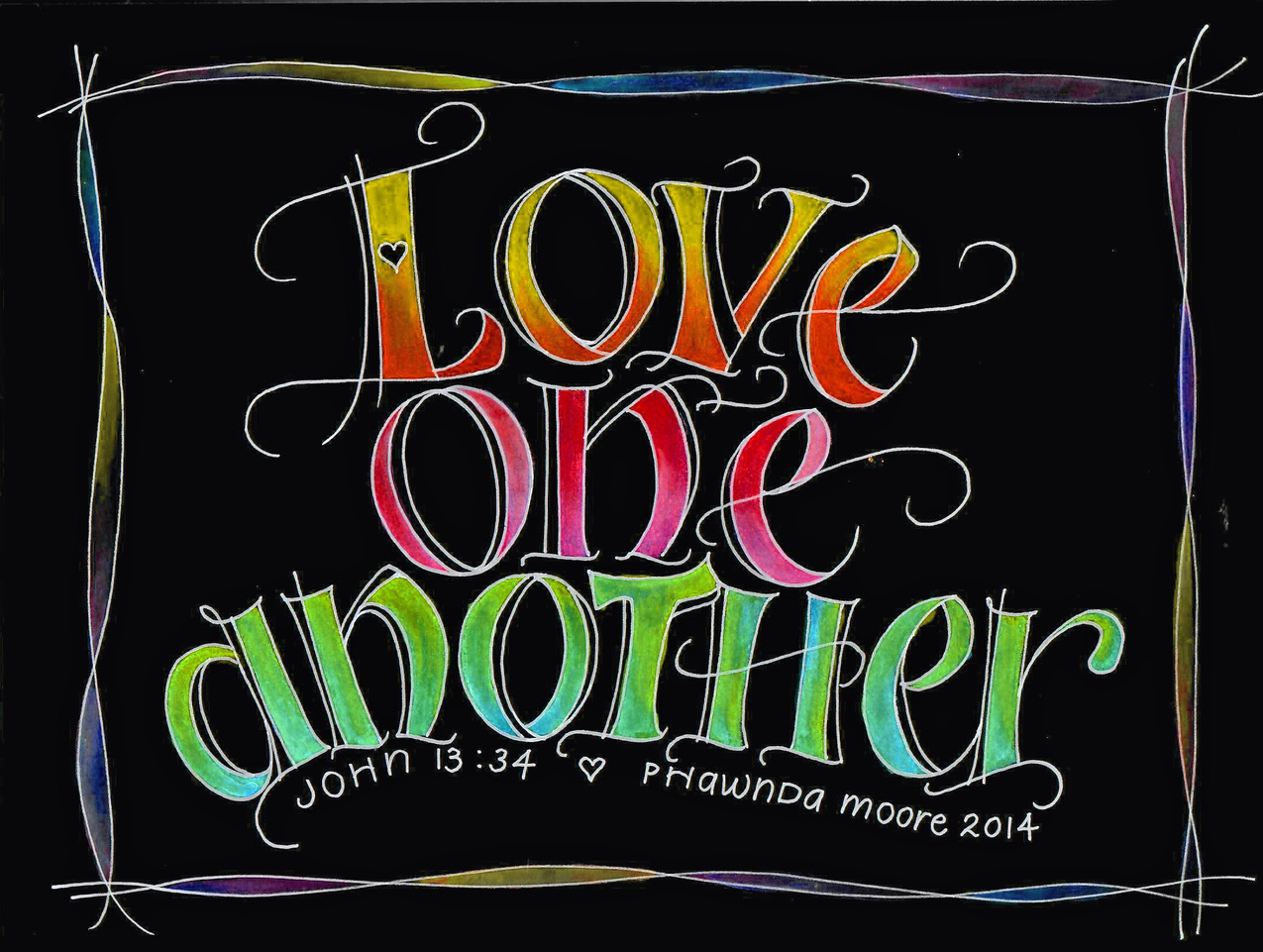
If love really comes down at Christmas, it must be the kind of love that not only demonstrates God’s love for each of us but our love for others.
I have a friend who feels deeply unloved and lonely. There are a number of reasons for this, beginning with a dysfunctional family of origin. He’s a beautiful person who has been conditioned to believe he’s not worthy.
After a particularly bad incident at work recently, he said to me — and pardon the language — “I know I’m a fuck up.” This self-assessment broke my heart. But that’s exactly how he feels.
One of my hopes as his friend is to be the kind of consistent source of affirmation he hasn’t known. He has created a self-fulfilling prophecy of rejection. And I refuse to be another person who walks away in fulfilment of that prophecy.
Here is what I think Christmas means: God’s love will not abandon us even when we’re “fuck ups.” That love is made visible in the Incarnation. But it will make a difference when we embody the example of God’s inhabiting our world and walking among us.
When we are present in the lives of others, we become the love of God to them.
Mark Wingfield serves as executive director and publisher of Baptist News Global.
Related article:
Upside Down Advent: Despair versus hope
Upside Down Advent: Anxiety versus peace
Upside Down Advent: Joy versus sorrow