

It wouldn’t be the first time, you know.
If Fox News wants to see what “fair and balanced” looks like they should check out National Public Radio. You know the folks at the helm are left of center, but they invariably pass the microphone to folks on both sides of controversial issues.
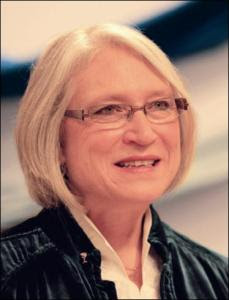
Take Morning Edition’s coverage of the firestorm of Indiana’s Religious Freedom Restoration Act. On Thursday morning, the suave and unflappable Steve Inskeep interviewed the Rev. Tim Overton, a Southern Baptist pastor from Muncie, Indiana who supported the Indiana RFRA in its pre-clarification form. The following day, Inskeep visited with the Rev. Dr. Sharon Watkins, General Minister and President of the Christian Church (Disciples of Christ).
What is more, these opposing voices had enough time to lay out a nuanced position: Watkins, had five minutes; the Overton piece was two minutes longer.
The coverage was as fair and as balanced as it gets; but what did we learn?
First, we learned that people of faith aren’t all on the same page when it comes to gay marriage. Frank Bruni made this point in a New York Times column this week, but it is commonly supposed, on the left and the right that real Christians oppose gay rights.
This misunderstanding exists for two reasons. First, the conservative position on gay rights lends itself to bumper sticker simplicity. Second, there is little theological consensus, on this or any other hot-button issue, within the Protestant mainline community.
These realities shaped the twin interviews of Morning Edition. The Southern Baptist pastor knew his congregation, and his denomination, had a simple response to gay rights:
As a Baptist pastor who believes the Bible, I believe God made us male and female. And embracing God’s will is embracing our gender and acting accordingly.
Nothing complicated about that. Because the Bible teaches that God created only two sexual orientations, men should marry women and women should marry men. So, if you think you are gay or lesbian, you’re mistaken because God, by definition, doesn’t make mistakes.
Tim Overton came across as a nice guy who just wants to honor God will his whole being. He knows that a lot of people disagree with his stand because they don’t share his commitment to biblical authority, and he respects that. Still, he says,
I would hope that society would make allowances for traditional Christian theology and belief and allow us to practice our faiths in the workplace and in public as well as our houses of worship.
-
Rev. Sharon Watkins

Sharon Watkins couldn’t speak with that kind of clarity. She appeared on Morning Edition as a denominational representative and the Disciples of Christ have struggled to achieve consensus on the issues of gay marriage and ordination. True, at least 80% of the folks attending the 2013 National Convocation accepted a resolution affirming gay marriage and opening the door to the ordination of gay men and lesbians. But, Watkins made it very clear that pastors, congregations and regional assemblies were free to reject the resolution if they so chose.
Steve Inskeep wanted to know how Watkins dealt with people in her denomination who, like Tim Overton, believe the Bible opposes gay marriage. Her response was revealing:
Yes, that is one of the words that is heard for sure. A couple of years ago, we had quite a discussion on this, and I can’t say that we came to consensus. But we acknowledge that just as we think and understand that Jesus welcomes all in love that we have to try to do the same. And so we just struggle to learn from our disagreement about the power of God’s love to hold us together, even when our opinions would seem to tear us apart.
Jesus welcomes all, so we must welcome all. That is at least the kernel of a theological argument.
Inskeep was too polite to state the obvious rejoinder, so let me lay it out for you as bluntly as possible: If Jesus welcomes all, and the Bible doesn’t, are Jesus and the Bible at odds?
Could Sharon Watkins handle that question with a crisp soundbite? No, she could not. No denominational leader in her right mind would pit Jesus against the Bible. That doesn’t play in Peoria.
But it doesn’t take a lot of theological perspicuity to notice that conservative Christians argue from the Bible while liberals appeal to Jesus. There is a good reason for this. It is fairly easy to find several passages in a big book like the Bible that appear to condemn homosexual behavior. Leviticus calls it an “abomination”, along with eating the meat of a sacrifice on the third day (days one and two are fine), eating unclean birds (eagles, vultures, buzzards and the like), and eating unclean animals (camels, rock badgers, rabbits and, of course pigs).
The Old Testament understanding of “holiness” isn’t primarily a matter of ethics or morality. God created the world with a certain order, and when you mess with that order life goes bad. Which is why Tim Overton, the Baptist pastor from Muncie, says that “embracing God’s will is embracing our gender.”
Simple enough, right? If you believe the Bible you reject gay marriage.
But it isn’t that simple. Take Peter’s vision in the eleventh chapter of Acts.
There was something like a large sheet coming down from heaven, being lowered by its four corners; and it came close to me. As I looked at it closely I saw four-footed animals, beasts of prey, reptiles, and birds of the air. I also heard a voice saying to me, “Get up, Peter, kill and eat.”
Maybe God can contradict himself. Or maybe this is a test, like when God told Abraham to sacrifice Isaac.
Peter takes his stand on the Bible, certain that God would approve.
But I replied, ‘By no means, Lord; for nothing unclean has ever entered my mouth’
Peter was expecting God to say something like, “Well spoken, my good and faithful servant, enter into the joy of your master.”
But a second time the voice answered from heaven, ‘What God has made clean, you must not call unclean.
Or, what God has called clean, you must not call an abomination.
So, maybe God can change his mind after all.*
Jesus preached, and lived, radical inclusion. The company he kept sparked scandal at every turn. Why does he consort with tax collectors, prostitutes, women, Samaritans, the poor, the sick and the insane? Doesn’t he know an abomination when he sees one?
To which Jesus replied, in effect, “What God has made clean, you must not call unclean.”
Logically, God, being God, cannot contradict himself or change his mind. But if the Bible is anything to go by, God can change his mind six times before breakfast and regularly does. It doesn’t just happen in the ministry of Jesus or in the New Testament, the Bible is a book about an mystifying God who shifts directions when you least expect it.
Are we comfortable with that kind of God? Of course we’re not. So what? That’s the kind of God we’ve got. How do I know? The Bible tells me so. Over and over and over.
Once again, the rejoinder is obvious. If God is radically welcoming, who is excluded? Nazis, pedophiles, drug dealers, terrorists? I mean, where do you draw the line?
Maybe drawing lines isn’t as important to God as it is to us.
Moreover, if God can change his mind about the nature of abomination, how do we know he hasn’t changed his mind about homosexuality? Or, to put a slightly different spin on the ball, what if we have been wrong about God all along?
All the evidence points in one direction: sexual orientation is not something we choose. Some of us are born with long legs. Call it a blessing or a curse, but, as Jesus himself noted, you can’t change it. God is responsible for the length of my legs, not me.
You can see where I am going with this.
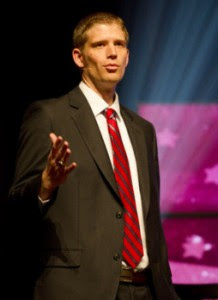
May I introduce the Honorable Matt Krause, R-Fort Worth? Texas has its own version of RFRA, a bipartisan measure passed in 1999 that resembles the federal statute. The intention was to protect the religious liberties of individuals against unwarranted government intrusion and has functioned admirably in that capacity.
But some Republicans wanted to amend the law in ways that would protect those wishing to discriminate against the LGBT community. This wouldn’t be stated explicitly, of course, any more than it was in the original form of the Indiana bill, but the intention is clear. The Indiana statute was carefully written to protect businesses from civil rights suits filed by individuals. Instead of protecting individuals from the government, the Indiana bill (and the proposed changes to the Texas law) protect businesses from aggrieved parties, in general, and LGBT couples in particular.
Although the proposed changes to the Texas law protected businesses, the chamber of commerce and other pro-business groups were alarmed. Identifying Texas as a gay-hostile state, they argued, would be bad for business (and this was before the Indiana fiasco).
-
Matt Krause

Matt Krause didn’t care. When others dropped the amendments to the Texas law, Krause picked them up. The proposed amendment to the Texas RFRA might be bad business, he admitted, but it’s good law, and even better theology. (Krause has a law degree from Jerry Falwell’s Liberty University so he knows the law, the Bible, and how the two should overlap.)
When reporters asked if Texas really wanted to mess with a toxic bill that was being reconsidered in red states like Indiana and Arkansas, Krause had his talking points ready:
Should a Jewish bakery have to bake a cake for the neo-Nazi convention coming into town? Nobody would say that. Nor would anybody say a gay florist couple has to give flowers to a Westboro Baptist protest at funerals. All [the proposed bill is] saying is that if you feel like it has been burdened, that gives you a chance to go to court to say the government is infringing on my religious freedom because they are forcing me to do this.
Wrong analogy, bro.
If sexual orientation is God-given (as all the evidence suggests), it isn’t gays and lesbians who we should be comparing to Nazis and the haters at Westboro Baptist Church.
How does the “God hates fags” theology espoused by Westboro Baptist differ from the position Indiana pastor Tim Overton and Texas politician Matt Krause are defending?
Overton and Krause eschew the term “fags” and they don’t protest military funerals (thanks on both counts, guys), but they embrace Westboro theology with an unholy passion. Their God might not hate fags, but he calls homosexuals “an abomination”. Written either way, the equation yields the same answer.
A majority of Americans have learned to see their gay brothers and sisters as . . . well, brothers and sisters. You know, real people. Just like straight folks. Any God who hates these people (or finds them abominable) is a morally compromised deity. And no one gets a pass for pumping up the hate just because their morally challenged God says they must.
If gay people were consciously messing with the straight orientation God gave them, the abomination argument ring true; but they aren’t. They just aren’t. And that changes the moral equation.
Now for the Nazis. In the Third Reich, homosexuals were verboten.
Beginning in 1933, gay organizations were banned, scholarly books about homosexuality, and sexuality in general, were burned . . . and homosexuals within the Nazi Party itself were murdered. The Gestapo compiled lists of homosexuals, who were compelled to sexually conform to the “German norm.”
The wiki article on homosexuals in Nazi Germany starts there and gets worse with each succeeding paragraph.
-

Homosexuals arrested in Nazi Germany

Matt Krause’s Nazi analogy might work if he had compared gay-haters to Nazis.
It wouldn’t have been a perfect fit, of course. Rev. Overton doesn’t want to see gay people punished, harassed or discriminated against and I trust that Mr. Krause concurs (you do, Matt, right?) No one (well, hardly anyone) wants gays shot on sight or shipped off to death camps, but what is the appropriate response to abominable people? Public shunning at the very least, I would think.
Abominable people should certainly be denounced from the pulpit, and we shouldn’t give the wretches any special legal protections. Not when the fix is so simple. At any moment, by Pastor Overton’s account, gay men and lesbians could simply “embrace their gender and act accordingly.”
But they don’t. That’s why they are abominable.
Begin with a faulty premise and you’re headed for strange territory.
If Jesus could welcome a traitor (tax collector), a terrorist (zealot), and a scoundrel (Judas) into his inner circle, surely he can make room for us. All of us. We might prefer to live in separate silos, but Jesus says no.
If you don’t care what Jesus says, that’s not an issue. But if you are Matt Krause, or Tim Overton, the radically inclusive Jesus is impossible, an illusion, a figment of the liberal imagination. What God has called unclean, they say, let not Jesus call clean. God spoke once and for all in Leviticus and, like the law of the Medes and Persians, God’s immutable Word stands for eternity.
The real Jesus can’t be boxed in like that. The real Jesus reverses the verdict of Leviticus whenever he chooses. He does that because he is God’s Son and, like they say, the apple don’t fall far from the tree.
*I realize it is bad theology to use exclusive pronouns for God; but good theology sometimes translates into clunky prose. My apologies for those who, for excellent reasons, are offended by references to a boy-God.