


Retirement is one of the strangest words in the Christian vocabulary.
We know how CEOs retire, athletes retire and politicians retire. They shake a few hands, kiss a few babies, give a farewell speech, collect a plaque engraved with their years of service and disappear into a quieter life often consisting of daily golf and a move to the sunshine state of Florida.
But what does retirement mean for someone whose life never has been simply a career but a calling? Can you retire from feeding sheep? Can you retire from justice? Can you retire from announcing good news to the poor?
“When I asked George Mason about retirement, he smiled and gently challenged the premise itself.”
When I asked George Mason about retirement, he smiled and gently challenged the premise itself: “Braxton, we have to rethink retirement.”
That sentence has refused to leave me. Because George Mason did not retire from ministry. He’s simply refusing to confuse a pulpit with a calling.
For more than three decades, Mason stood behind the pulpit of Wilshire Baptist Church in Dallas. He became nationally known as a preacher and public theologian, a role he now leans into more heavily as founder of Faith Commons, an interfaith nonprofit he leads with Nancy Kasten, a Jewish rabbi.
Most Mondays now, you’ll find him at ICE headquarters in Dallas, protesting with other clergy and offering aid and counsel to terrified immigrants coming for appointments there. He remains a sought-after community voice and was instrumental in launching the Baptist House of Studies at SMU’s Perkins Theological Seminary.
When they’re not visiting grandchildren in San Antonio or Oklahoma City, he and his wife, Kim, will be found Sunday mornings in the pew at Wilshire. He remains a committed churchman from the pew rather than the pulpit now.

Geroge Mason (eft) recording a. video poecast with BNG’s Mara Richards Bim
Legacy of inclusion
To describe his ministry by the sermons he preached would be to miss the deeper witness of his life. His legacy is not measured in attendance charts or building campaigns. His legacy is measured in the people who finally believed there was room for them. Sometimes it took him a while to get there, but he did eventually, and the welcome was genuine.
The woman called to preach when others told her she couldn’t. The LGBTQ Christian who walked into church expecting another wound and instead found a family. The nearly 40 pastoral residents who learned to live into their voices and are continuing to use those voices boldly around the world. The Black pastor whose voice was not merely tolerated but honored and now stands in the very pulpit Mason occupied for 30 years. The refugee. The doubter. The survivor. The fiancée of America’s first Ebola victim. The weary soul who had almost given up on God because God’s people had first given up on them.
“To describe his ministry by the sermons he preached would be to miss the deeper witness of his life.”
In addition to being an exemplary preacher, this always has been Mason’s ministry. Not simply welcoming people into a church but helping them believe they never had been outside the heart of God.
That may sound ordinary, but as a white Baptist man in Texas, it has been prophetic.
American Christianity has become remarkably good at preserving institutions, less so at preserving the gospel. Too often we have protected our traditions while abandoning the very people Jesus spent his ministry pursuing.
We have learned how to defend doctrine while forgetting how to defend dignity. We have perfected committee meetings while neglecting justice. We know how to visit hospitals. We know how to edit newsletters. We know how to approve budgets. But somewhere along the way, many churches forgot how to proclaim liberation to the captives. Somewhere along the way, we watered down and whitewashed Jesus. We made the Lion of Judah into a chaplain for our comfort.
George Mason never seemed interested in that version of Christianity.
He made an observation that cuts to the heart of what that watering-down costs. Some people did not leave the church. They were pushed away. He emphasized that those are not the same story.
“The tragedy is not declining attendance. The tragedy is declining imagination.”
Churches lament empty pews while refusing to ask who was made to feel unwelcome long before they ever walked out the door. The tragedy is not declining attendance. The tragedy is declining imagination. We have forgotten that the church never was supposed to be a fortress protecting itself from the world. It was supposed to be a table large enough for the world.
Black Church influence
During our conversation, George reflected on the witness of the Black Church, and his words carried the humility of someone willing to learn from a tradition that has preserved something many white churches have forgotten. That, too, is his legacy through geniune partnerships and friendships that transcend race.
The Black Church, he suggested, helped save the gospel for the American church.
History has a way of explaining why: Oppression strips the gospel down to what actually matters. When you’ve been denied freedom, you hear Moses differently. When you’ve lived beneath an empire, Mary’s Magnificat sounds less like poetry and more like revolution. When your body has carried generations of injustice, Jesus announcing freedom to captives is no longer a metaphor. It is survival. It is hope.
The Black Church refused to separate salvation from liberation because history never allowed it to. And perhaps that is why it so often has reminded the rest of us what the gospel was announcing all along.

George Mason (left) with others at a No Kings Rally in downtown Dallas.
Inspired by prophets
One observation from Mason has stayed with me. He spoke of the prophets. We often imagine them as activists, firebrands or public critics. But he reminded me our churches have made an equally dangerous mistake.
“We’ve reduced pastors to caregivers.”
“We’ve reduced pastors to caregivers,” he said. Hospital visits. Committee meetings. Sermon edits. Administration. All necessary work. All holy work. But not the whole work. The prophets were pastoral because they loved people enough to confront the systems crushing them.
Jesus did not choose between compassion and confrontation. He healed bodies, overturned tables, wept, challenged the empire, fed crowds and exposed hypocrisy among the religious. The pastoral and the prophetic never have been enemies. They always have belonged to one another. The church forgot that, but George Mason never did.
Mason said something else that is underlined about 10 times in my notebook: “What are we being prophetic about?” That question should haunt every preacher. Not because we need longer or louder sermons, but because we need a clearer gospel and real good news.
We often hear a litany of gospels that don’t reflect the gospel of Jesus the Christ. We hear a gospel that cannot speak about immigrants while Jesus was once a refugee. A gospel that cannot speak about racism while every person bears God’s image. A gospel that cannot speak about women while Mary preached resurrection before Peter. A gospel that cannot be political while Jesus stood up to the government. A gospel that cannot speak about LGBTQ neighbors while claiming to proclaim God’s boundless love.
What exactly are we being prophetic about? Certainly not the Jesus who stood with the overlooked, touched the untouchable, welcomed the outsider and repeatedly found himself accused of loving the wrong people.
Freedom and justice
Perhaps that is why Mason isn’t interested in retirement. He’s interested in freedom and justice for all people. While he has stepped away from the relentless rhythm of weekly ministry, his attention turns even more intentionally toward the work that always has animated him: social justice.
He simply moved closer to the questions that always have shaped his pastoral ministry: How do we widen the table? How do we tell the truth? How do we stand with those pushed to the margins? How do Baptists become known less for the people we exclude and more for the Christ we proclaim? Perhaps that is retirement in the Kingdom of God. Not less vocation but freer vocation.
One of the last things Mason said to me was, “The vitality is in holding together the pastoral and prophetic.” I believe he’s onto something. Justice and mercy. Truth and compassion. The Black Church and the broader Baptist tradition. The sanctuary and the streets. Our witness to the world and our willingness to listen to one another. George Mason spent decades refusing to let those pairs come apart.
And because he did, Wilshire Baptist Church became more than a congregation. It became a witness. A living reminder that welcoming all people is not progressive branding. It is Christian discipleship. That justice is not politics baptized in religious language. It is what love looks like when it enters public. That hospitality is not a ministry of the church. It is the posture of the kingdom of God.
George Mason left the pulpit. He did not leave the gospel.
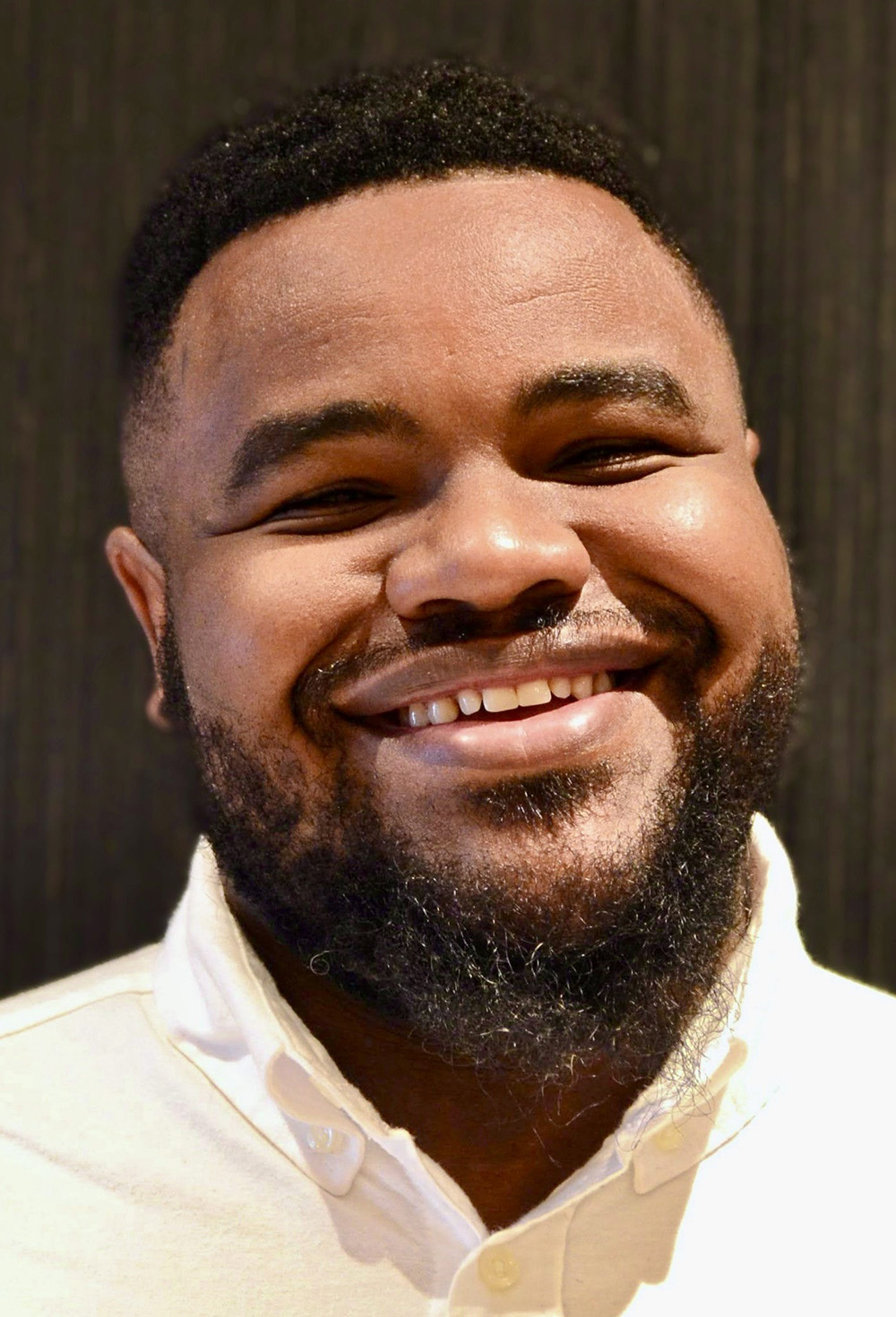
Braxton Wade
Braxton Wade is a Clemons Fellow with BNG. He is a graduate of the University of Richmond and Chicago Theological Seminary and lives in Richmond, Va.
Related:
In conversation with Art Wright
In conversation with my grandmother
In conversation with Jim Somerville
In conversation with Benjamin Boswell
In conversation with Lisa Dunson, Alliance of Baptists president